LLMs are the new travel discovery layer, but most hospitality brands don't know it yet. Matt
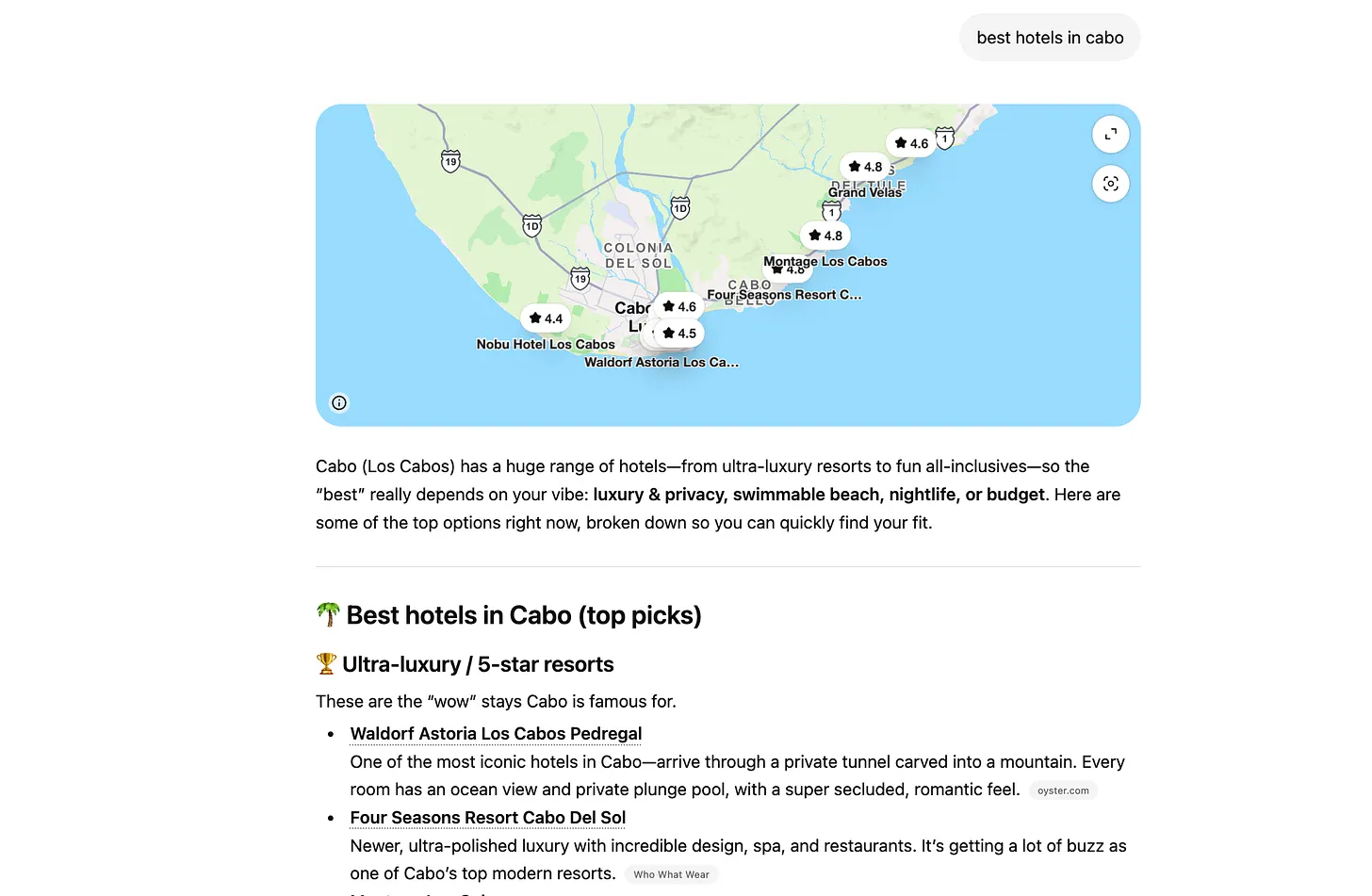
Recently posted about this on LinkedIn… below’s my full thought.
Maybe you’ll be taken aback by this stat too: Anthropic’s scrape-to-visit ratio is 6,000:1 (Skift, 2025). That means for every person their AI sends to a website, it has consumed 6,000 pages of content. ChatGPT runs at 250:1 (Skift, 2025). Even Google, which we thought was bad, has gone from 2:1 a decade ago to 6:1 today (Skift, 2025).
These models are eating the internet and barely sending anyone back to the source.
For 30 years, the travel industry built its entire discovery infrastructure around the logic of search: create content, optimize for keywords, earn the click, then convert the booking. OTAs turned that formula into a $34-billion-a-year business (Booking Holdings + Expedia) by mastering the same game, at scale, faster than most individual properties ever could (Skift, 2025). OTAs accounted for 25% of all hotel bookings in 2024 (Skift, 2025).
Now, that game is shifting.
40% of Americans aged 16 and older are now using AI chatbots monthly (Skift Research, 2025). 29% of them are using AI specifically to plan travel (Adobe Analytics, 2025). AI-sourced travel site visits jumped 3,500% year-over-year in just one month—last July (Adobe Analytics, 2025). And organic search traffic across 800 major tourism clients — Visit Denver, Jamaica Tourism Board, other major attractions — is down 30-40% (Satisfi Labs, 2025).
This is looking like the no-click era. The AI answers the question era. The website doesn’t get the visit era.
So what actually determines who gets recommended?
When someone asks ChatGPT or Gemini “where should I stay in Marrakech for a truly cultural experience,” the model isn’t searching Booking.com. It’s drawing on everything it’s been trained on: travel editorial, press coverage, brand stories compelling enough to be republished and cited, cultural context it absorbed from millions of pieces of content. The brands that surface aren’t the ones with the best keyword density, but rather the ones with the most legible story. I.e. narrative infrastructure. I.e. storytelling ecosystems. I.e. leaning into your story, the things that make your brand unique, then consistently sharing that.
TikTok just added urgency to all of this.
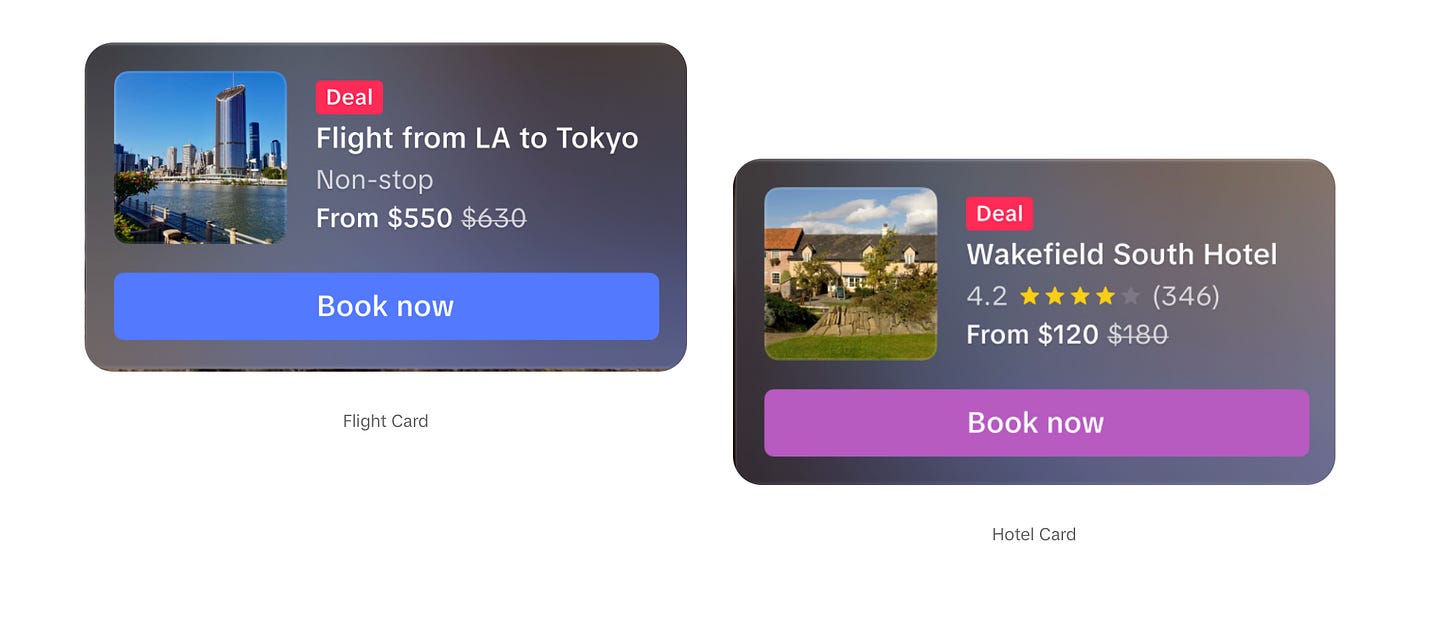
They are beta-testing hotel metasearch cards that appear inside the feed: a hotel photo, a name, rate options from Expedia and Booking.com, a booking flow — all without leaving the app (TikTok, 2025). 66% of TikTok users already call it their most helpful source of travel inspiration (TikTok, 2025). Users are 2.6x more likely to book an experience after searching for it on the platform (TikTok, 2025). This isn’t TikTok becoming a travel brand; It’s TikTok becoming the platform that decides which travel brands exist in a user’s awareness.
The OTAs themselves can feel the pressure. Bernstein Research gives a 60% probability to a scenario where AI platforms erode OTA market share significantly, and where hotels bypass OTAs entirely, further feeding their best inventory and storytelling directly to LLMs (Skift, 2025). The middlemen aren’t gone, but their leverage seems to be shrinking in real time. Note, I say seems here because these changes are happening fast. It doesn’t take a genius to see that AI has changed the way people search, and while we can try to predict what’s going to happen, the outcome is not yet set. While middlemen may lose first-touch attribution, in this scenario, TikTok’s new feature still routes searchers to Expedia and other OTAs.
Another note to return to: the brands best positioned for this — the change that’s occurring — aren’t the ones with the largest media budgets. They’re the ones with the most clearly defined, consistently told story. That’s what AI cites. That’s what TikTok’s algorithm amplifies. That’s what earns you a recommendation in a room where you have no paid presence.
I’ve been calling this ‘owned demand’ (others have too) — the difference between an audience and a community, between attention you rent and attention you’ve built. In the old search paradigm, you could rent discovery. You’d buy the Google Ad and win the click. That still works… But the trend line is clear. —>
The brands that survive the AI discovery shift won’t be the ones that figure out the new paid channel the fastest. No, they’ll be the ones that built narrative gravity (depth of story) before the shift happened, so that when an AI is asked what’s worth visiting, their story is already in the answer.
If someone asked ChatGPT today to recommend a property like yours, would you show up? I’m not asking about a sponsored result…. Organically, in the actual recommendation.
If you don’t know the answer, well, there you go.
References:
Image Credit: TikTok