Kempinski Hotels bought a monastery. McKinsey says AI is about to book your rooms. These two stories are more connected than they seem.
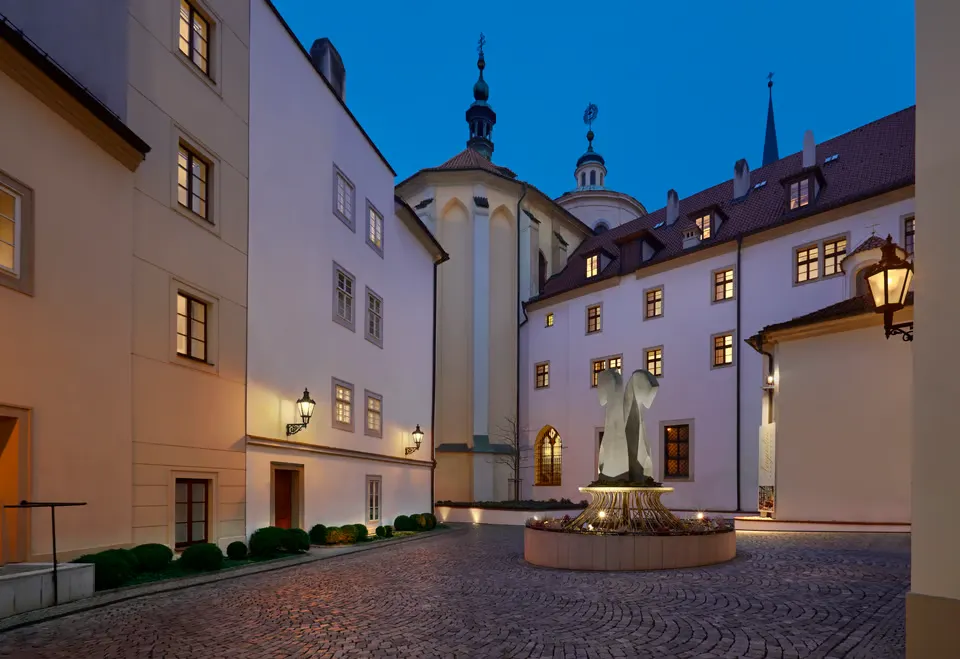
Two stories dropped recently that, on the surface, have almost nothing to do with each other…
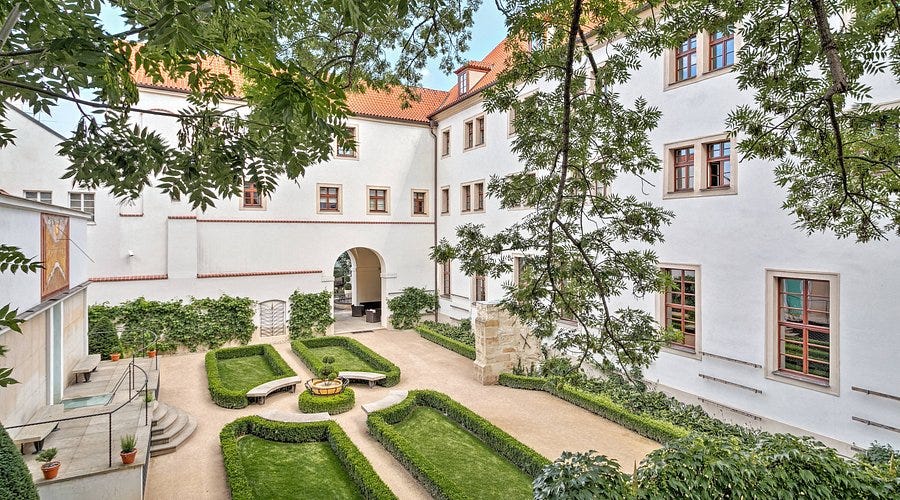
The first story: Kempinski Hotels, Europe’s oldest luxury hospitality group, made its first hotel acquisition in over 50 years. They bought a property inside an 800-year-old Augustinian monastery in Prague (where monks still live and worship). The hotel has 101 rooms, original vaulted ceilings, a bar in the former monastic dining hall, and a library spanning centuries of thought. It was previously managed by Marriott International under the Luxury Collection brand (and before that, Rocco Forte). Kempinski ended that arrangement, bought the asset outright, and is rebuilding the property around what CEO Barbara Muckermann calls “the Kempinski of the Future” (Kempinski Group, 2026).
The second story: McKinsey and Skift published a joint report on agentic AI in travel. Agentic AI, unlike gen AI (which most people are familiar with), doesn’t just advise. It acts. It can research, decide, and book an entire trip autonomously. The report surveyed 1,002 travelers and 86 travel executives, and found that 70% of consumers want a digital assistant that can manage a complete trip for them. More than 60% say they’d choose a travel company offering AI-powered booking over one that doesn’t (Skift Research & McKinsey & Company, 2025).
One story is about a monastery, and the other is about autonomous AI booking. Together, they are about the exact same thing.
The Problem with Optimized
Before I connect them, let’s talk about what “optimized” looks like in hospitality right now.
It looks like a hotel that was designed to photograph well. Room-service being delivered by a robot, not a person. A Lobby with a millennial pink accent wall, curated bookshelves, and maybe a neon sign with something vaguely aspirational. AI answering a guest’s first booking call. Room categories engineered to maximize upsell conversion. F&B that exists to hit margin targets rather than to be genuinely worth visiting. A loyalty program that gives you points toward your next stay, which you’ll book through the OTA anyway.
That is the template, and that template produces properties that are interchangeable because when you optimize for performance metrics, you converge toward the same answers as everyone else who’s optimizing for performance metrics.
Kempinski’s move is the explicit rejection of this. Muckermann’s quote is worth pondering: “Rather than pursuing uniformity, we believe that Kempinski’s brand strength lies in its collection of highly individual properties, many of which are historic, architectural landmarks and are deeply resonant of the destinations’ culture and community” (Kempinski Group, 2026).
That’s the anti-template thesis. It’s not diversity for its own sake, but rather specificity as competitive advantage. A property that is so deeply, unmistakably itself that it cannot be mistaken for anything else.
You can’t build a replica of an Augustinian monastery in Malá Strana (Prague). The monks have been there since the 13th century. The vaulted ceilings weren’t designed by an architect chasing a brief; they were built by people who believed in something. That history doesn’t just add atmosphere. It adds irreplaceability, and irreplaceability is, in the long run, one of the only real moats in luxury hospitality.
The Marriott Detail
Beginning to touch on how these stories are connected…
Augustine Hotel Prague was previously managed by Marriott International under its Luxury Collection. Kempinski ended that arrangement to acquire the property and rebuild it under their own flag (Khan, 2026).
Think about what that means as a strategic signal. Marriott’s Luxury Collection is one of the most prestigious brand frameworks in hospitality; it’s how global brands access heritage properties without owning them. For Kempinski to take this property out of that framework and into direct ownership, this isn’t just an acquisition. It’s a declaration that the management fee model has limits and a framework, which I’d say, Kempinski does not want to be a part of. That operating inside someone else’s brand system, even a prestigious one, costs you something.
It costs you narrative control.
When a property sits inside a global brand framework, the story gets shaped by the framework. The loyalty programs, the booking infrastructure, the brand standards — they all add an anchor to what the property can become. Kempinski is betting that owning the narrative end-to-end, with all the investment and risk that entails, is worth more than the distribution and infrastructure that a Marriott arrangement provides.
Chief Product & Experience Officer Rasha Lababidi put it plainly: “With direct ownership, we can shape that vision with precision, translating our brand seamlessly across every touchpoint of the guest journey” (Kempinski Group, 2026).
That’s the owned demand thesis in institutional form. They’re not renting the narrative. They’re owning it.
Now Enter the Algorithm
Tying the McKinsey/Skift report back in here…
The report’s central argument is that agentic AI is about to fundamentally change how travel gets booked. Unlike gen AI, which responds to prompts and offers suggestions, agentic AI can take initiative. It can browse, compare, decide, and book (correct me if I’m wrong on the booking part), all without a human in the loop. When a traveler tells their AI assistant to “find me a luxury property in Prague for five nights in June; it must be historically interesting,” the agent will go looking.
What will it find?
It will read structured data—what the property says about itself across booking platforms, editorial coverage, and brand touchpoints; It will read unstructured data—reviews, travel features, cultural mentions; and it will ensure its quality. Then, it will synthesize all of that into a recommendation. The properties with the clearest, most consistent, most well-documented identities will surface. The ones with generic descriptions, interchangeable positioning, and thin editorial presence will get filtered out before a human even sees the results.
This is the same dynamic I wrote about a couple weeks ago about the London AI recommendations study, where five hotels captured 57% of all AI-generated recommendations because they had built a more coherent narrative infrastructure than their peers. The Kempinski Prague story is a 50-year investment in exactly the kind of narrative coherence that wins that game.
An 800-year-old monastery in Malá Strana, reimagined as the physical expression of a brand’s vision for ultra-luxury, that’s a story the algorithm can read. Clearly, consistently, and across every surface.
The Broader Pattern
Kempinski is also entering the U.S. market this year, but not with a hotel… they’re entering with a branded residential development in Miami’s Design District (Kempinski Group, 2026). 132 residences, two towers, Arquitectonica architecture, Rockwell Group interiors. Their first touchpoint with American consumers is a home, not a hotel room.
That’s a fandom ecosystem strategy. You create a community of brand believers before you open a hotel. They are literally creating a *well* for their fans to live. The residents become the brand’s most credible ambassadors—people who’ve literally staked their lives on the Kempinski experience. By the time Kempinski opens a Miami hotel, the community already exists.
Meanwhile, the McKinsey/Skift report notes that 78% of hospitality companies are already using gen AI, but more than 80% have seen no material contribution to earnings (Skift Research & McKinsey & Company, 2025). The investment is there, yet the returns aren’t. Why? Is this truly the ‘AI Bubble’ manifested? Maybe… or maybe it’s because AI just amplifies what’s already there. If what’s there is generic, undifferentiated, and built on a template, then the AI just makes the generic faster and cheaper.
The brands with irreplaceable stories will get the returns. The ones that built interchangeable products will keep wondering why their AI spend isn’t moving the needle.
A Question Worth Sitting On
Kempinski CEO Barbara Muckermann said Augustine Hotel Prague will serve as “the first truly physical and experiential representation of the Kempinski of the Future” (Kempinski Group, 2026).
The Kempinski of the Future.
What does the future look like for your brand? Not your brand promise or your brand guidelines… the physical, experiential expression of what you’re building toward. What does that look like? Is there a property in your portfolio that embodies that completely? Is there a moment, a space, a story that could only be yours?
Because when an AI agent is browsing properties on a guest’s behalf (it’s coming faster than most hotel marketing teams are prepared for), that’s the question it’s asking for them
The brands that have an answer will be recommended. The ones that don’t will be compared on price.
References:
Kempinski Group. (2026, April 2). Kempinski Group announces the acquisition of Augustine Hotel Prague. Kempinski Group Press Room. https://www.kempinski.com/en/press-room
Kempinski Group. (2026, January 30). Kempinski Residences Miami Design District marks U.S. debut for Kempinski Residences. Kempinski Group Press Room. https://www.kempinski.com/en/press-room
Khan, M. (2026, April 6). Kempinski Group makes first acquisition in 50 years. Connecting Travel. https://www.connectingtravel.com
Skift Research & McKinsey & Company. (2025). Remapping travel with agentic AI. Skift.
Both Photo Credits: Kempinski Group