Hotels keep pouring $$ into digital ads, yet watch their revenue per available room fall. The brands actually growing? They’re investing in what’s happening at the table.
Two reports dropped in the same month, and I don’t think anyone put them side-by-side.
The first one: independent hotels saw global revenue per available room (RevPAR) decline ~5% in 2025 (Cloudbeds, 2025). Cloudbeds analyzed 90 million bookings across 180 countries. We’ve seen this before–OTA dependency, rising commissions, no brand loyalty infrastructure to convert browsers into direct bookers. The response, per a separate report published today, is equally familiar: hotels are spending more on digital advertising (best media info, 2026). Sarovar Hotels says 65-70% of their marketing spend is now digital–performance marketing, social media, influencer collabs; JW Marriott Mumbai says that a “larger share” is going to content-led digital platforms; and OPO Hotels states 50-60% of their marketing spend is going to digital and performance marketing.
More digital spend. Less RevPAR. The cycle doesn’t stop, does it?
The second report is the one that should’ve been the headline: hotels with culturally relevant dining are seeing 18.6% higher RevPAR than those without (Cloudbeds, 2025).
…Not the hotels with the biggest ad budgets. Not the ones with the prettiest feeds. The ones with the best restaurants.
Anchoring
What the data is actually saying: a great restaurant doesn’t just fill tables, it drives room bookings. It becomes the reason someone, who never searched for you on Expedia, ends up in your hotel.
Hospitality has spent decades treating food & beverage (F&B) as a necessary cost – something to support room revenue, but only tolerated because guests need somewhere to eat. The numbers have now inverted. Properties with real dining experiences are seeing the restaurant push the room, not the other way around.
This is what’s commonly referred to as ‘anchoring.’ Instead of waiting for someone to book a room and then maybe eat dinner on-property, experience-led restaurants attract guests who come for the dining experience and also discover the hotel. The room becomes the afterthought. A very comfortable, very profitable afterthought.
Hotels without compelling F&B now risk commodity status – competing purely on rates and discounts, and on whatever platform serves them up in the next search result! Hotels with experience-led dining have a different problem: managing demand, which is a much better problem to have.
This is owned demand in its most physical form (see last week’s article for owned demand in algorithmic form). You’re not buying attention… You’re creating a reason to show up.
$320,000,000
Karim Alibhai, CEO of Gencom, just paid $320 million for the Ritz-Carlton New York Central Park. This is a market where other investors cite labor costs, profitability drops, and mayoral shifts as reasons to stay out of New York. Alibhai, on the other hand, leaned in with three luxury hotels in under two years.
What does he say he’s doing at the Ritz-Carlton first?
He’s repositioning all of the food-and-beverage operations, and possibly introducing a members’ club.
Imagine looking at a $320 million acquisition and deciding that the lever is the restaurant, not the rooms, and not the digital marketing strategy.
It’s not a coincidence. At Thompson Central Park – another Gencom property acquired in 2024 for $308 million – net operating income more than doubled in year two (Gencom, 2026). “Same hotel, same manager,” Alibhai said. The difference was asset management and strategic repositioning, and for his biggest bet yet, the restaurant is the first move.
A members’ club, if it materializes, goes even further. A members’ club isn’t an amenity; it’s a fandom ecosystem. It creates a community of regulars who aren’t guests – they show up every week, transforming the hotel from a place you sleep at into a place that’s culturally alive. That community becomes the hotel’s most effective marketing channel, and it costs nothing to run except the investment in the experience that made people want to belong in the first place.
Smart money is betting on the experience. Not the ad.
What Gen-Z Actually Wants
Look here…
Expedia Group’s Unpack ‘25 trend report flagged something called “Goods Getaways,” which is the rise of travelers building itineraries around food-first experiences, not just dinner reservations. 39% of travelers now regularly visit grocery stores when they travel, and 44% are shopping specifically for local goods that they can’t get at home (Expedia Group, 2025). Coffee tours in Costa Rica, tea tastings in China, and matcha experiences in Japan are among the most-booked experiential activities on Expedia (Expedia Group, 2025).
My generation travels to taste places, not just see them.
…then there’s this: 42% of Gen Z say all-inclusive is their preferred hotel type (Expedia Group, 2025). Hotels.com saw a 60% year-over-year jump in searches filtered for all-inclusive. #allinclusive was even trending on TikTok (Expedia Group, 2025). As such, is it safe to say that Hyatt and Marriott have both entered the all-inclusive category?
This reads as counterintuitive, though. Isn’t Gen Z supposed to be the authenticity generation? Aren’t we supposed to be the anti-chain, anti-corporate, find-the-hidden-gem generation?
Yes. But we also want immersive experiences. We associate with things that leave us impressed, and we associate with brands that build a world that invites us in (think Coach, The NFL, or your favorite [event]).
The all-inclusive preference isn’t about convenience. It’s about immersion.
That instinct maps directly into the F&B RevPAR story. Hotels with experience-led dining are offering something adjacent to that immersion – a contained, culturally coherent world that starts at the table and extends into the rest of the property. You come for dinner, and you stay for the night. You come back for brunch, then you tell someone about it.
That’s a fandom ecosystem. That’s owned demand. That is being built through experience, not advertising.
The Paradox
The real problem with the “go digital” response to declining RevPAR is that it treats the symptom, not the disease.
Always. More ads. More seo optimization. More this, more that.
Independent hotels aren’t losing to OTAs because they’re not on Instagram enough (though that is the case for some). They’re losing because OTAs have structural distribution advantage – loyalty programs that convert browsers to bookers, platform scale that independent properties can’t match with ad spend. Airbnb/Vrbo, Booking.com, and Expedia controlled 71% of the global short-term rental market in 2024, which was up from 53% in 2019 (Skift Research, 2024).
Independents can’t outspend that kind of position.
What they *can* do, however, is make the OTA listing irrelevant by building something people search for by name.
The hotel with the neighborhood’s best restaurant doesn’t need a ‘conversion optimization strategy.’ People are Googling “[property name] dinner reservation” and ending up in a room they didn’t plan to book. That’s a fundamentally different acquisition play; and it’s one that no algorithmic update, no platform change, and no commission rate spike can touch.
The brands that have built this kind of cultural weight don’t disappear when Google shifts its ranking logic, or when Booking.com raises its commission %. These brands are protected by the thing the platform can’t replicate: a human reason to be chosen that exists independent of the search result.
The Real Question
If you’re a VP of Marketing at a hotel group reading this, I’m not saying that you should stop the digital spend. Channels will always matter.
But before you optimize the next campaign, ask whether what you’re advertising is actually worth the attention you’re paying for.
Because if the property is genuinely a destination, if the restaurant is worth the drive, if the experience creates the kind of moment people describe on their way home, then the marketing is already happening. Every table is a billboard. Every conversation between circles is an ad. Every social post that gets made in your dining room is a content piece that your team didn’t have to brief or pay for.
The brands winning right now invested in the experience first. The marketing budget followed and went further, because there was actually something to point to.
That’s the shift, and the data is saying it LOUDER.
Sources:
“Restaurants Drive 18.6% RevPAR Growth, Independent Hotels Lose Ground to OTAs” - Hospitality Net, Cloudbeds
“Three in NYC: Unpacking Luxury Hotel Deal Dynamics with Gencom CEO Karim Alibhai” - CoStar News
“Hotels Are Shifting Marketing Spends to Where Travellers Scroll, Search and Book” - Best Media Info
Expedia Group Unpack ‘25 Trend Report
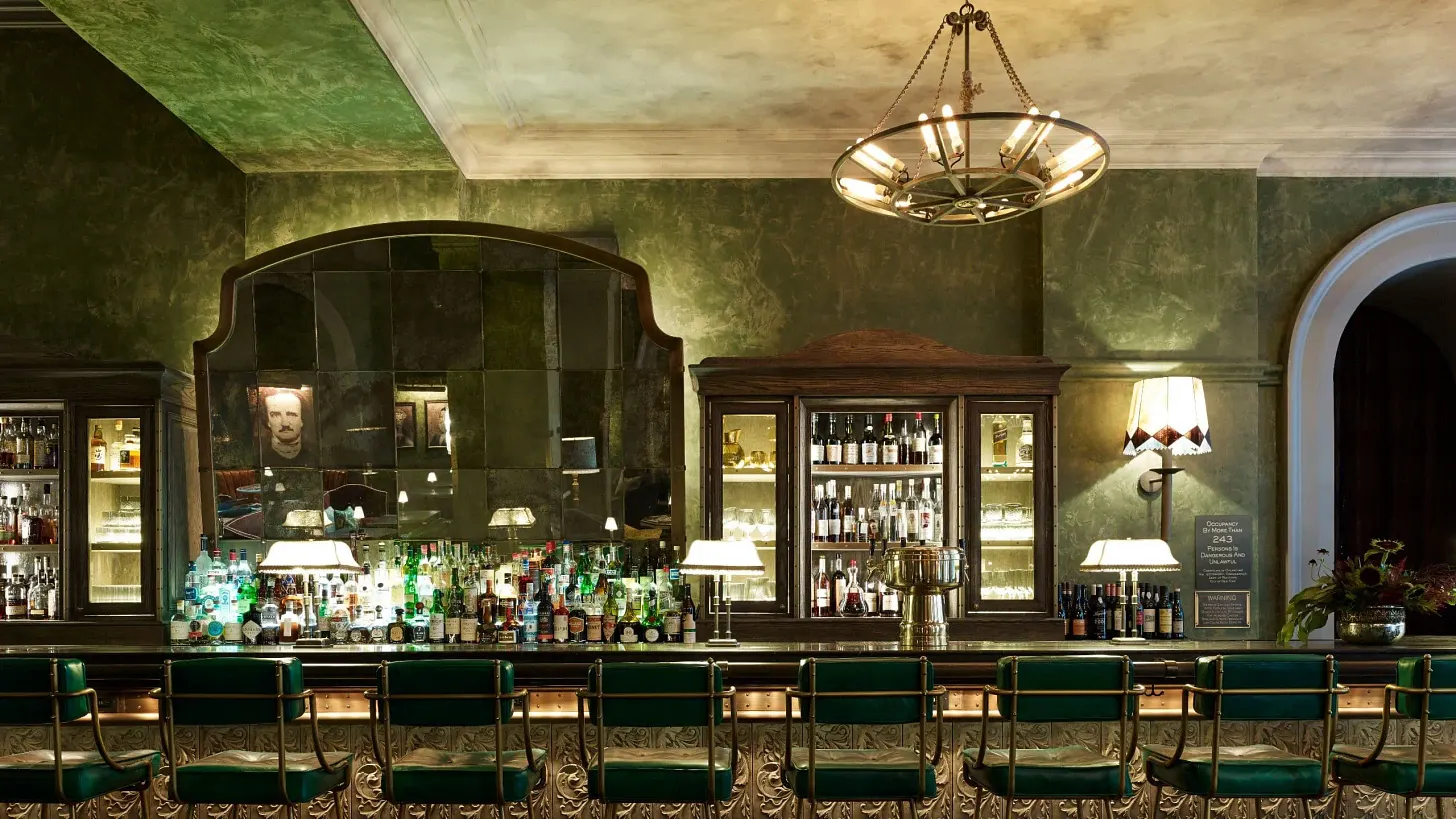
**photo is from ‘The Beekman, a Thompson Hotel’ and is unrelated to this post